





Homepage / Remia
This category research for Remia reveals how consumers make choices across diverse sauce categories. You gain insights into unique opportunities and commonalities between product groups for targeted growth. This enables you to concretely structure your offerings, communications, and shelf plans effectively to capture market share.
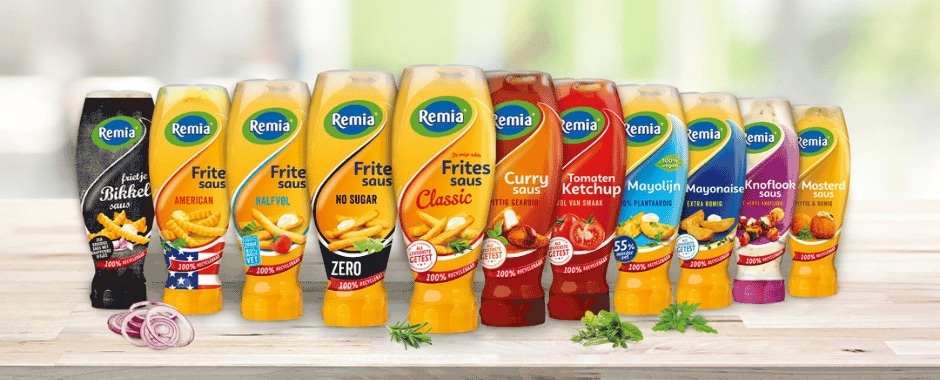
Remia is a prominent brand in Dutch supermarkets, active across a wide range of product groups including frying sauce, mayonnaise, ketchup, curry, and satay sauce. No other brand is so broadly represented in the sauces market. From this unique position, Remia aims for strategic growth, which necessitates in-depth food category research to understand opportunities and challenges per product group and maximise their market position.
With such an extensive product portfolio across various (sub)categories, Remia’s challenge was where to begin its growth strategy. You want to make informed decisions and identify where the biggest opportunities lie. Therefore, it was essential to first broadly explore how consumers purchase sauces and what drives their choices.
We started with a qualitative exploration through a community study and accompanied shoppings. This provided insight into needs and context during purchase, and the influence of the shop floor. Subsequently, findings were validated with quantitative research, analysing the purchasing process of the last bought sauce per respondent, including a Customer Decision Tree assignment to map out the decision-making process.
The abundance of data now holds no secrets for Remia. The insights from the in-depth research have been directly translated into concrete next steps. This has led to a clear roadmap for both product development and effective shopper activation, as well as an optimised category plan.
Remia now precisely understands which needs drive purchases and can adapt its portfolio accordingly. This increases the relevance and attractiveness of its products.
By understanding the Customer Decision Tree, Remia can more sharply align in-store communication and presentation. This helps consumers make more targeted choices and stimulates purchases.
Remia can now develop campaigns based on consumer insights that resonate with the drivers for each sauce category. This maximises the impact and effectiveness of marketing efforts.
The detailed insights provide a solid foundation for reviewing and optimising the overall category plan. This enables Remia to make strategic decisions that lead to structural brand growth.
A Customer Decision Tree maps out consumers’ ‘decision pathways’. By understanding the sequential considerations leading to a purchase, brands can precisely align their marketing and product offerings with their target audience’s decision-making processes. This helps to address customer needs at the exact right moment, thereby achieving targeted growth.
Qualitative research, such as community studies and accompanied shoppings, provides in-depth insights into consumers’ needs and context during purchase decisions. This enables you to uncover hidden drivers and unconscious influences on the shop floor. For Remia, this led to a better understanding of the unique aspects and commonalities between sauce categories, which is crucial for identifying growth opportunities.
An action workshop is essential for translating the vast amount of data from research into concrete action points. In this workshop, insights are identified, concretised into potential actions, and then prioritised based on impact and feasibility. This ensures that research results directly lead to actionable plans for, for example, product development, shopper activation, or category management, as was the case with Remia.
Do you recognise yourself in this case? Discuss with our research specialist what this approach means for your brand.
What are you looking for?
Brand growth
Expertise
Solutions
cases
Read more about our bol.com case study and customer journey research here.
Read more about our Etos case and Online Community Research study here.
Read here how our Distinctive Brand Asset research provided the right answers for Wehkamp.
about us

