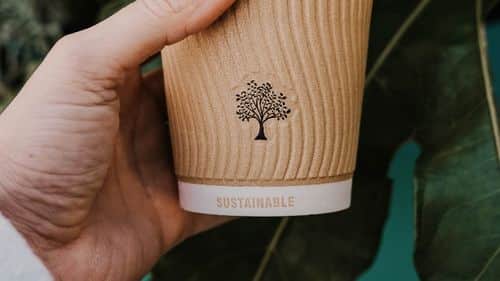
Did you know that 92% of consumers sometimes buy sustainable products? But what does ‘sustainable’ actually mean? The 1994 edition of Van Dale, the leading Dutch dictionary, defined the Dutch word duurzaam as ‘suitable, intended to last a long time’. Yet sustainable food often has a shorter shelf life. That’s right: ‘sustainable’ has taken on a broader meaning. But what do consumers actually understand by it?
Thought leadership
Van Dale’s definition has since changed. Today, it defines duurzaam as: ‘1 long-lasting; 2 not easily subject to wear or decay; 3 having little impact on the environment: sustainable energy sources such as wind, sun and hydropower; sustainable production’ (Van Dale, 2020). That makes the concept somewhat clearer, but not entirely, precisely because ‘sustainable’ turns out to have several meanings, and which one people mean can vary by company or person.
Sustainable: a relative term
In society, ‘sustainable’ is a fairly relative term, and our research confirms it. We asked consumers: what makes a product sustainable? One replied: ‘It can’t contain plastic, it must have a sustainability label, it must be fresh and from our own country.’ Another said: ‘It must be animal-friendly and environmentally friendly. And give farmers a fair income, for example.’ And another: ‘It must be durable, made from resources that don’t deplete the earth, recyclable and produced fairly.’ In short: ask ten people, get ten answers.
‘Sustainable features’ according to consumers
What really makes a product sustainable in consumers’ eyes? What does it need to live up to? When we put all the answers side by side, nine features of sustainability emerged. These are the criteria consumers expect sustainable products to meet.
9 features of sustainable products. Sustainable products are products that:
- are better quality and so last longer;
- are made locally, so they don’t have to travel far;
- are made in good conditions for people and animals;
- are paid a fair price for (fair trade);
- contain no chemical additives, such as organic products;
- are economical, using little electricity and water;
- are produced ‘green’, without depleting the earth;
- contain no animal ingredients, in other words are vegan;
- are produced to organic standards.
These features paint a picture. But how do they translate into actual products? We asked consumers which sustainable products they’d bought in the past month. The ones they mentioned most were reusable water bottles, bin bags, organic food such as vegetables, pasta and eggs, fair trade chocolate, eco-friendly cleaning products, and loose fruit and vegetables.